Made in the UK
Trade Pricing
Fast Lead Time
Easy Ordering





Blog / Sign Maintenance & Repair Guide
Posted on-
April 7, 2026 15:07
Every outdoor sign degrades over time. Rain, UV, frost and the occasional stray football all take their toll, and eventually even the best-made commercial signage starts to look tired. The good news is that a faded, peeling or dented sign doesn't always need replacing from scratch.
A bit of routine cleaning, the right repair at the right time, and a clear-eyed decision about when it's actually cheaper to start again can add years to the life of a business sign. This guide walks through how to clean every common sign material safely, how to fix the most frequent problems, when to repair versus replace, and a simple preventive maintenance schedule you can run through month by month.
The first rule of sign cleaning is that the right method depends entirely on the material. A routine that's fine for aluminium can destroy acrylic, and a pressure washer aimed at printed vinyl can strip a two-year-old graphic in about three seconds. Here's how to do it properly for every common sign type.
For acrylic signs, use warm soapy water and a clean microfibre cloth. Wipe in straight lines rather than circles, which helps avoid the light swirl marks acrylic is prone to showing. Rinse with clean water and pat dry with a second microfibre.
Never use glass cleaner, household sprays or solvents. Products containing ammonia, alcohol or acetone will cloud the surface permanently. For light scratches, a dedicated acrylic polish works well, but anything deeper usually means re-vinyl or replacement.
Warm soapy water is again the go-to for aluminium signs, dibond and most powder-coated metal fascias. Use a soft cloth or sponge and work from top to bottom so dirty water doesn't run onto a clean area. Rinse thoroughly, because soap residue can leave streaks on a matt powder coat.
For brushed aluminium that's started to oxidise or dull, a non-abrasive metal polish applied with a soft cloth will bring the finish back. Always work in the direction of the brush lines, not across them, and never use wire wool or green scouring pads.
Printed vinyl signs and window graphics are tougher than they look but they don't like pressure. Stick to warm soapy water and a soft cloth or sponge, and keep pressure washers well away, even on their lowest settings. The edges of a vinyl print are the weak point, and high-pressure water will find them every time.
For stubborn dirt, grime or bird mess, soak the area with warm soapy water for a few minutes before wiping. Patience beats scrubbing, and scrubbing beats solvents.
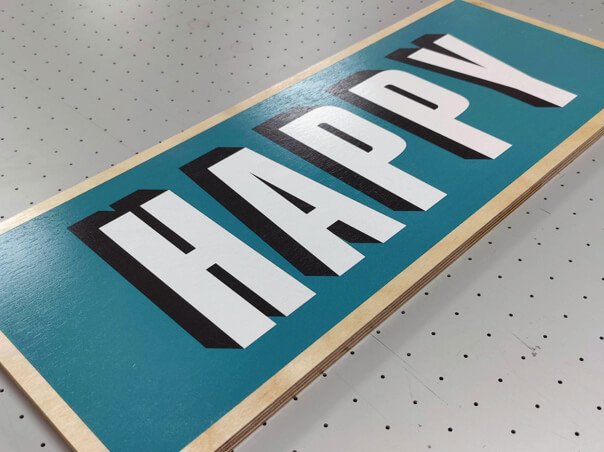
Maintenance for wooden signs is about protecting the finish rather than scrubbing the surface. Start by brushing off any loose debris, moss or cobwebs with a soft brush, then wipe the sign down with a damp cloth to lift any surface dirt.
The key check is the water bead test. If water no longer beads up on the surface, the protective coating has worn through and the sign needs re-oiling or re-varnishing. Leaving an untreated wooden sign exposed is how rot gets in, and rot is far more expensive to fix than a fresh coat of finish.
With illuminated LED signs, the first and most important step is to switch the power off at the isolator before you start cleaning. Once isolated, clean the exterior using the method appropriate to the face material (acrylic, aluminium, vinyl and so on).
If the internal lighting has started to look dim or uneven, that's usually an LED module issue rather than a cleaning problem. A qualified electrician or sign company can open the sign, test the modules and replace only the failed sections, which is a fraction of the cost of a full retrofit.
Most signs fail in one of five predictable ways. Knowing which is which is the difference between a £100 tidy-up and an unnecessary £500 replacement.
UV is the number one enemy of outdoor graphics. South-facing signs get hit hardest, but any sign left in direct sunlight for years will eventually lose colour. If the substrate is sound (no cracks, no warping, no delamination), a re-vinyl is usually the right answer. Typical re-vinyl costs sit around £80 to £200 for a standard fascia, compared with £180 to £500 or more for a full replacement.
Vinyl that's starting to lift at the edges or bubble across a panel is a warning sign, not a terminal one. If less than about 20% of the surface is affected, a spot repair is often enough: the damaged section is lifted, the substrate cleaned, and a fresh piece of vinyl applied. If more than 20% of the vinyl has failed, a full re-vinyl is the sensible call, because patchwork repairs on an aged print rarely age well.
Once a sign substrate has cracked, warped or delaminated, it's finished. No coating or overlay will restore structural integrity, and trying to patch a failed substrate is throwing good money after bad. The silver lining is that a replacement is the perfect opportunity to upgrade: signs that have failed early are usually on cheap substrates, and swapping a cracked Foamex panel for a Dibond or aluminium version typically adds five to seven years of life for a modest price jump.
When an illuminated sign goes dim in patches or loses whole sections, the instinct is to panic. Usually there's no need. Most LED failures are down to a single module, which can be swapped out for £30 to £80 including labour. The exception is signs that are seven years old or older, where multiple modules are starting to fail together. At that point, a full retrofit to a current-generation LED system is often better value than chasing individual failures month after month.
After a storm or a high-wind event, it's worth giving your sign a proper inspection. Check brackets, fixings, mounting plates and the integrity of the sign face itself. Cracked acrylic is not repairable and needs replacing. Loose or corroded brackets need tightening or swapping before the whole sign comes down and takes something (or someone) with it.
When the quotes come in, the repair-or-replace decision usually boils down to three questions: is the substrate sound, how old is the sign, and is the brand still current? The table below shows where the money tends to land for the most common scenarios we see.
| Scenario | Repair Cost | Replacement Cost | What to Do |
|---|---|---|---|
| Faded graphics, sound substrate | £80-£200 (re-vinyl) | £180-£500 | Repair |
| Peeling vinyl (under 20%) | £80-£200 (spot or re-vinyl) | £180-£500 | Repair |
| Cracked Foamex | Not repairable | £25-£60, or £180+ to upgrade to Dibond | Replace and upgrade |
| Single LED module failure | £30-£80 | £120-£500+ | Repair |
| Multiple LED failures (7+ years old) | £150-£300 | £120-£500+ | Replacement often better value |
| Rebrand or name change | Re-vinyl only if design fits | £180-£500+ | Usually replace |
Most sign problems we're called out to could have been caught months earlier. A simple recurring maintenance routine takes ten minutes a month and can genuinely add years to the life of a sign. Here's the schedule we recommend to every UKSS customer.
Every three months, give the sign face a full clean using the right method for its material. Regular cleaning prevents build-up that turns into permanent staining, and it's also your opportunity to get close enough to spot problems you'd miss from the ground.
Sit down and look at the sign honestly. Do the graphics still feel current? Are the colours still doing their job, or have they shifted? Is your brand still the same brand it was when the sign went up? Three to five years is the sweet spot for a refresh, whether that's a re-vinyl on a sound substrate or a full upgrade to a better material.
The cheapest repair is always the one you never need. When ordering new signage, a few small decisions at the point of manufacture make a big difference to how often you'll be back cleaning, fixing and replacing.
Choose the right material for the location: Dibond or powder-coated aluminium for permanent outdoor use, cast acrylic (not extruded) for illuminated or UV-exposed fascias, and treated hardwood for any wooden sign that's going to live outside. Make sure printed graphics are finished with a UV-protective laminate, not bare ink, because the laminate is what buys you those extra years of colour fastness. And ask about fixings: stainless steel brackets and mounts outlast mild steel in every UK weather scenario worth planning for.
At UK Sign Shop every order includes a FREE artwork check and UK manufacturing as standard, and the team is happy to recommend the longest-lasting option for your specific location before you commit. With over 50 years of sign-making experience and 500,000+ customers behind us, we've seen where signs fail and we'd rather help you avoid that up front.
Use warm soapy water and a clean microfibre cloth, wiping in straight lines rather than circles. Never use glass cleaner, ammonia-based sprays or solvents, as they will cloud the acrylic permanently. Light surface scratches can be polished out with a dedicated acrylic polish, but if the colour has faded from UV exposure, cleaning alone won't restore it. At that point a re-vinyl or replacement is the right next step.
Yes, as long as the substrate underneath is still sound, a re-vinyl is usually the best-value repair. A standard fascia re-vinyl typically costs £80 to £200, compared with £180 to £500 or more for a like-for-like full replacement. If the panel itself is cracked, warped or delaminating, re-vinyl isn't an option and the sign needs replacing.
Replace rather than repair when the substrate has failed, when multiple LED modules have gone on a sign that's seven years old or more, or when you're rebranding. Cracked, warped or delaminated panels can't be rescued, and chasing repeated LED failures on an ageing illuminated sign usually costs more than a modern retrofit. For everything else (faded graphics, peeling vinyl, a single LED module, loose fixings), repair is almost always the cheaper and smarter option. Our full outdoor signs range is the sensible starting point when it's finally time to upgrade.
We've worked with some of the biggest brands in and around the UK.
Above are just a few of the brands we've been lucky to have worked closely with to create bespoke and unique signage fabrications.
